
Vocabulary in context
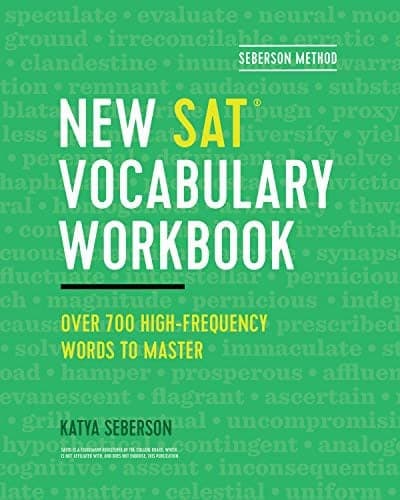
SAT Vocabulary Workbook
The closest companion to SATVocab for students who want guided lessons and written practice.
Check the workbook
A strong liking or habitual tendency toward a particular thing; a tendency to do something.
nounPick the meaning. Keys A–D work too.
Your choice schedules the next review.
Imagine a librarian who, year after year, shelves only mystery novels and makes a point of recommending them to every patron. This persistent preference—always drawn to mysteries—is her penchant.
Sounds like 'pen-chant' (PEN-chant, with emphasis on the first syllable).
Looks like 'pennant' (similar spelling and letter pattern).
Penchant is often followed by for: 'a penchant for something.' The adjective form is rare but exists in some contexts as 'penchanted' (less common).
inclination, preference, proclivity, predilection, affinity
Avoid mixing with 'penitent' or 'penitence.' Do not confuse with 'predilection' in some contexts, though they are close in meaning. The standard collocation is 'a penchant for [something].'
From French penchant 'leaning, inclination', from pencher 'to incline', from Latin pendere 'to weigh' (to hang, weigh).
Mnemonic: Imagine an enchanted pen that CHANTS as it leans toward a favorite topic—your penchant is your natural inclination or leaning toward something.
Continue in alphabetical order.
Pick any word below to jump in.
Having no definite form or shape; lacking a clear structure.
To establish or fortify a position, belief, or habit so that it becomes difficult to change; to surround or secure a position by digging trenches.
Poisonous; capable of causing harm to living beings. It is also used figuratively to describe something harmful, destructive, or dangerous in a non-physical sense (for example, a toxic relationship).
Related words and words with the same part of speech.
A preference or special liking for something; a natural inclination.
The act or instance of humiliating or degrading someone; the state of being lowered in dignity or status.
The quality or state of being wildly unreasonable, illogical, or ridiculous; something that is completely contrary to reason or common sense.
A distinctive way of pronouncing words; the act of emphasizing a syllable or word (as a verb, to accent means to emphasize).
An honor; a public expression of praise or an award.
Bitterness of speech or manner; ill feeling
Study beyond this word
Add a workbook for repetition or the official guide for full-test context.
Vocabulary in context
The closest companion to SATVocab for students who want guided lessons and written practice.
Check the workbook
First-time test takers
Official question styles, test structure, and print practice from the College Board.
Check the official guidePaid Amazon links. As an Amazon Associate I earn from qualifying purchases.