
Vocabulary in context
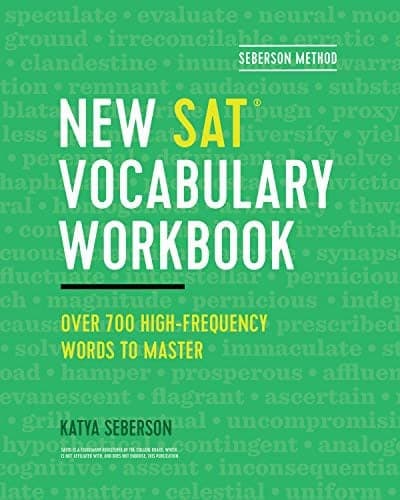
SAT Vocabulary Workbook
The closest companion to SATVocab for students who want guided lessons and written practice.
Check the workbook
To protect against possible loss by taking offsetting actions, especially to reduce financial risk.
verbPick the meaning. Keys A–D work too.
Your choice schedules the next review.
Picture a cautious investor who plants a literal hedge around a portfolio diagram on a desk. As markets swing, the hedge absorbs the impact of losses, keeping the overall position safer.
/hɛdʒ/ (sounds like 'hedge')
Hedge, a dense row of shrubs used as a boundary; imagine a privacy hedge between two houses shared by neighbors.
To hedge your bets means to reduce risk by taking offsetting positions or protections. The term comes from the idea of a garden hedge that fences in and protects what’s inside.
mitigate, protect, guard, offset, diversify, risk management, hedge fund
Hedge implies reducing risk, not guaranteeing profits. In finance, hedging often uses derivatives or opposite positions; a hedge may still involve some risk or cost. The noun form hedge refers to the plant boundary itself.
From Old English haga (hedge, fence); related to Dutch haag and German Hecke, originally meaning a fence or boundary and later extending to the financial sense of reducing risk.
HEDGE: Hold Every Dollar, Guard Earnings (visualize a hedge guarding a portfolio against losses).
Continue in alphabetical order.
Pick any word below to jump in.
Having or showing creativity and originality in thinking; able to imagine new ideas, scenarios, or solutions.
To influence, affect, or alter (often in a subtle or indirect way).
Sociable; fond of company; often living in groups or preferring the company of others.
Related words and words with the same part of speech.
To make something less severe, harmful, or harsh; to alleviate or reduce the impact of an adverse condition.
To give up completely, to desert or leave behind, or to relinquish a claim, plan, or responsibility.
To decrease in amount or intensity; to reduce or end something.
To formally end or repeal a system, practice, or institution; to officially put an end to something established.
To shorten (a text, speech, or other work) by omitting parts; to condense.
To depart secretly or flee, especially to avoid detection or arrest.
Study beyond this word
Add a workbook for repetition or the official guide for full-test context.
Vocabulary in context
The closest companion to SATVocab for students who want guided lessons and written practice.
Check the workbook
First-time test takers
Official question styles, test structure, and print practice from the College Board.
Check the official guidePaid Amazon links. As an Amazon Associate I earn from qualifying purchases.