
Vocabulary in context
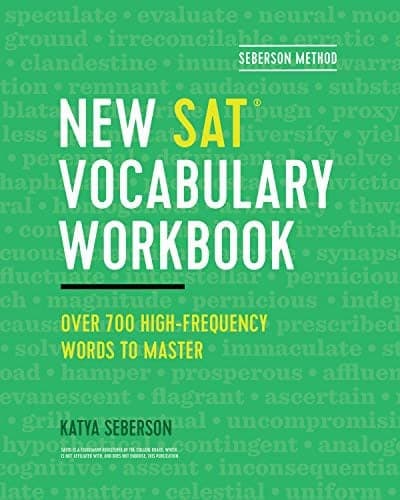
SAT Vocabulary Workbook
The closest companion to SATVocab for students who want guided lessons and written practice.
Check the workbook
Mercy or leniency shown toward someone, especially by a judge or official, sparing or reducing punishment.
nounPick the meaning. Keys A–D work too.
Your choice schedules the next review.
Picture a weary judge in a quiet courtroom who, after hearing pleas and considering rehabilitation, grants clemency to a prisoner, sparing them from a harsher sentence or execution.
KLEM-ən-see
Clement (related adjective; both share the merciful sense)
Clemency derives from a Latin root meaning merciful; historically, rulers used clemency to show mercy while not necessarily declaring innocence.
Mercy, leniency, pardon, forgiveness, compassion
Clemency is a broad concept that can include pardons, reprieves, or commutations. It is distinct from a formal pardon (absolving guilt) and from commutation (reducing the sentence).
From Latin clemens, meaning merciful, via Old French clemence (clemency) and Latin clemēns (merciful). The noun form in English arose in the Middle Ages to denote merciful treatment by authority.
CLEM-ENCY: Think of 'Clement' (a merciful name) plus '-ency' to remember that clemency is merciful leniency granted by someone in power.
Continue in alphabetical order.
Pick any word below to jump in.
Related words and words with the same part of speech.
The act or instance of humiliating or degrading someone; the state of being lowered in dignity or status.
The quality or state of being wildly unreasonable, illogical, or ridiculous; something that is completely contrary to reason or common sense.
A distinctive way of pronouncing words; the act of emphasizing a syllable or word (as a verb, to accent means to emphasize).
An honor; a public expression of praise or an award.
Bitterness of speech or manner; ill feeling
A word formed from the initial letters of a phrase, pronounced as a single word and used as a shorthand for the full name (for example, NASA or radar).
Study beyond this word
Add a workbook for repetition or the official guide for full-test context.
Vocabulary in context
The closest companion to SATVocab for students who want guided lessons and written practice.
Check the workbook
First-time test takers
Official question styles, test structure, and print practice from the College Board.
Check the official guidePaid Amazon links. As an Amazon Associate I earn from qualifying purchases.