
Vocabulary in context
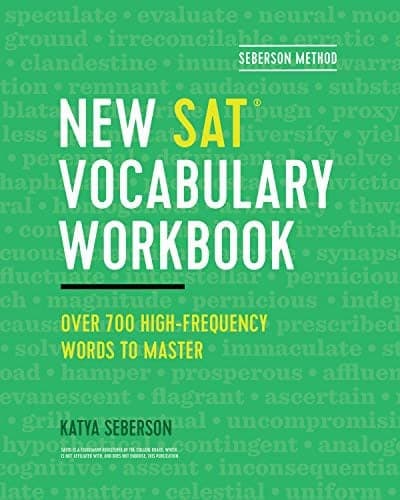
SAT Vocabulary Workbook
The closest companion to SATVocab for students who want guided lessons and written practice.
Check the workbook
To claim that something is true, typically without providing proof or before evidence has been established; often used in legal or formal contexts to present a proposition as a matter of fact.
verbPick the meaning. Keys A–D work too.
Your choice schedules the next review.
In a courtroom, a lawyer calmly says, The witnesses allege that the defendant was at the scene, while investigators are still gathering evidence to prove or disprove the claim.
uh-LEJ
related forms such as alleged, allegation
Allege is used to report someone’s claim, not to assert truth. The adjective form is alleged (as in 'the alleged thief').
claim, assert, contend, purport, allegation
Do not treat allege as proof. Use with 'that' or with a clause to specify what is being claimed. In formal writing, 'allege' often introduces statements attributed to others.
From Old French allegier or alleguer meaning 'to cite as grounds; to plead', from Latin allegare 'to bring forward as grounds for a claim', from ad- 'to' + ligare 'to bind'.
Allege is like legal with an extra e — a legal claim that may not be proven.
Continue in alphabetical order.
Pick any word below to jump in.
A medicine or treatment that cures or alleviates a disease; or a means of solving or correcting a problem. As a verb, to remedy means to fix or rectify something.
To spread out or distribute over a wide area; to disperse or disseminate. As an adjective, describing something that is not concentrated or is unfocused/rambling.
Relating to or accomplished through collaboration; involving two or more people or groups working together toward a shared goal.
Related words and words with the same part of speech.
To strive or compete in a contest or conflict; to assert or argue a point.
To give up completely, to desert or leave behind, or to relinquish a claim, plan, or responsibility.
To decrease in amount or intensity; to reduce or end something.
To formally end or repeal a system, practice, or institution; to officially put an end to something established.
To shorten (a text, speech, or other work) by omitting parts; to condense.
To depart secretly or flee, especially to avoid detection or arrest.
Study beyond this word
Add a workbook for repetition or the official guide for full-test context.
Vocabulary in context
The closest companion to SATVocab for students who want guided lessons and written practice.
Check the workbook
First-time test takers
Official question styles, test structure, and print practice from the College Board.
Check the official guidePaid Amazon links. As an Amazon Associate I earn from qualifying purchases.