
Vocabulary in context
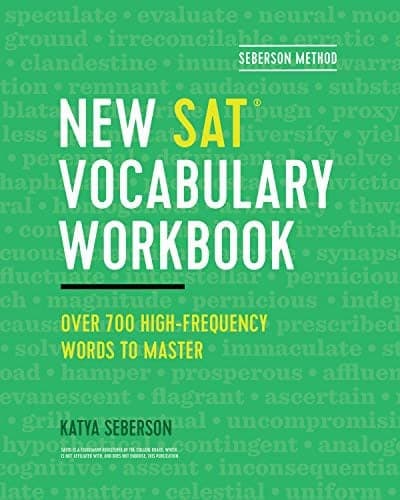
SAT Vocabulary Workbook
The closest companion to SATVocab for students who want guided lessons and written practice.
Check the workbook
Based on assumption or probability; supposed or accepted as true for the sake of argument or for the purpose of reasoning, without conclusive proof.
adjectivePick the meaning. Keys A–D work too.
Your choice schedules the next review.
Imagine a doctor giving a presumptive diagnosis of pneumonia from fever and a cough, but insisting final confirmation will wait for lab results and a follow-up X-ray.
pruh-ZUHMPT-iv
Looks like the root 'presume' plus the suffix '-ive'; visually related to 'presume' and 'presumption'.
Presumptive means 'based on probability or initial evidence' rather than proven. It is commonly used with 'presumptive diagnosis' or 'presumptive evidence.' Related noun: presumption.
presume, assume, suppose, infer, presumption, probable
Do not confuse with 'presume' (verb) or 'presumption' (noun) by themselves. Presumptive describes something temporary or not yet proven; contrast with 'conclusive' or 'definitive' which imply proof.
From Latin praesumptivus, from praesumere 'to take beforehand' (prae- 'before' + sumere 'to take'); via French and English adaptations.
PRE-SUME-PTIVE: Before you have proof, you 'pre-sume' (assume) based on clues; the -ptive suffix marks it as an adjective describing that state.
Continue in alphabetical order.
Pick any word below to jump in.
Distant in space or relationship; aloof or unfriendly in manner.
To force a rule, tax, burden, or other obligation to be accepted or put in place by authority; to burden someone with something unwelcome.
A person who practices severe self-denial or abstains from worldly pleasures, often for religious or spiritual reasons.
Related words and words with the same part of speech.
To arrive at a conclusion through reasoning from given facts or evidence; to deduce.
Difficult to understand; obscure or highly complex.
Happening by chance or without deliberate planning; not intended. In music, it is also a noun for a symbol that temporarily alters a pitch.
Sharp or biting in tone or taste; caustic or mordant in manner.
Ready to agree or approve without protest; compliant.
Rigid in opinion or purpose; not willing to change one's mind or position.
Study beyond this word
Add a workbook for repetition or the official guide for full-test context.
Vocabulary in context
The closest companion to SATVocab for students who want guided lessons and written practice.
Check the workbook
First-time test takers
Official question styles, test structure, and print practice from the College Board.
Check the official guidePaid Amazon links. As an Amazon Associate I earn from qualifying purchases.