
Vocabulary in context
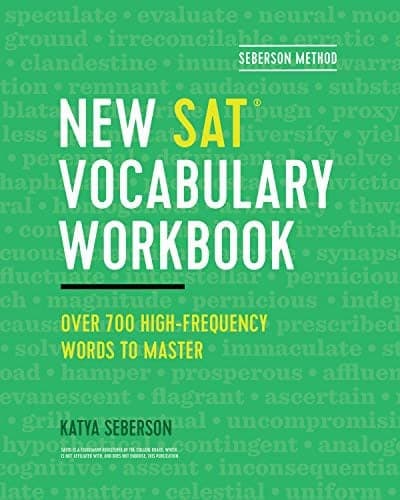
SAT Vocabulary Workbook
The closest companion to SATVocab for students who want guided lessons and written practice.
Check the workbook
An earlier event, decision, or action that provides a model or justification for future similar cases or actions.
nounPick the meaning. Keys A–D work too.
Your choice schedules the next review.
Imagine a court hallway lined with dusty case files. Each file represents a past ruling. The judge points to an old ruling and says, 'We will follow this precedent to decide the current case.' New decisions must align with these earlier examples.
PRES-uh-dent (sounds like 'president' in many dialects)
resembles 'precede' or shares the root 'preced-' meaning before
In law, a precedent is a guiding example for future cases; the doctrine of stare decisis means courts generally follow prior decisions when the facts are similar.
model, standard, guideline, benchmark, pattern, template
Do not confuse precedent with precedence. Precedent is an example set by a previous decision; precedence refers to priority in order or importance.
From Latin praecedens, from prae- 'before' + cedere 'to go, yield'; the noun denotes something that goes before to guide later actions.
Mnemonic: PRECEDENT = PRECEDE + DENT. It helps you remember that a precedent is something that goes before to guide future decisions.
Continue in alphabetical order.
Pick any word below to jump in.
Having the opposite of the desired effect; actions or policies that hinder rather than help progress.
To discipline or punish in order to improve behavior or character.
Arrogantly proud; having or showing an overbearing sense of one's own importance.
Related words and words with the same part of speech.
The act or instance of humiliating or degrading someone; the state of being lowered in dignity or status.
The quality or state of being wildly unreasonable, illogical, or ridiculous; something that is completely contrary to reason or common sense.
A distinctive way of pronouncing words; the act of emphasizing a syllable or word (as a verb, to accent means to emphasize).
An honor; a public expression of praise or an award.
Bitterness of speech or manner; ill feeling
A word formed from the initial letters of a phrase, pronounced as a single word and used as a shorthand for the full name (for example, NASA or radar).
Study beyond this word
Add a workbook for repetition or the official guide for full-test context.
Vocabulary in context
The closest companion to SATVocab for students who want guided lessons and written practice.
Check the workbook
First-time test takers
Official question styles, test structure, and print practice from the College Board.
Check the official guidePaid Amazon links. As an Amazon Associate I earn from qualifying purchases.