
Vocabulary in context
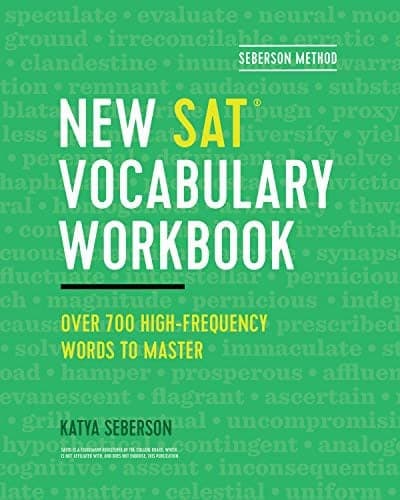
SAT Vocabulary Workbook
The closest companion to SATVocab for students who want guided lessons and written practice.
Check the workbook
To dispute the truth, validity, or honesty of a claim, statement, or someone's motives; to challenge or cast doubt on.
verbPick the meaning. Keys A–D work too.
Your choice schedules the next review.
Imagine a courtroom where a lawyer sharply questions a witness, pointing to inconsistencies and saying, 'I impugn the witness's credibility.' The crowd leans forward as the gavel signals tension.
im-PYOO-n
Contains the root 'pugn' (fight) and the prefix 'im' (in/against); visually hints at a fight against a claim.
Impugn is about questioning or doubting the truth or integrity of something, not merely disagreeing with it. Common objects include motives, credibility, or claims.
dispute, doubt, challenge, question, refute
Do not confuse with impute (to attribute something). Impugn focuses on doubt or challenge to truth or integrity; it often follows with evidence or argument. Common collocations: impugn the motives, impugn the reliability, impugn the validity.
From Latin impugnare 'to fight against,' formed from in- 'against' + pugnare 'to fight'; entered English via Old French.
IM-PUGN: Imagine a tiny pug in a courtroom, raising a paw to oppose a claim—IM PUGN means to fight against or doubt the statement.
Continue in alphabetical order.
Pick any word below to jump in.
To explain or describe something in greater detail; to add more information. As an adjective, describing something that is highly detailed or ornate.
Hostility or enmity; a strong feeling of dislike that leads to active opposition.
The process of conducting tests and trials to discover or verify something; the systematic testing of hypotheses or ideas.
Related words and words with the same part of speech.
To prove a statement or theory false or incorrect; to deny the validity of something through evidence or logical argument.
To give up completely, to desert or leave behind, or to relinquish a claim, plan, or responsibility.
To decrease in amount or intensity; to reduce or end something.
To formally end or repeal a system, practice, or institution; to officially put an end to something established.
To shorten (a text, speech, or other work) by omitting parts; to condense.
To depart secretly or flee, especially to avoid detection or arrest.
Study beyond this word
Add a workbook for repetition or the official guide for full-test context.
Vocabulary in context
The closest companion to SATVocab for students who want guided lessons and written practice.
Check the workbook
First-time test takers
Official question styles, test structure, and print practice from the College Board.
Check the official guidePaid Amazon links. As an Amazon Associate I earn from qualifying purchases.