
Vocabulary in context
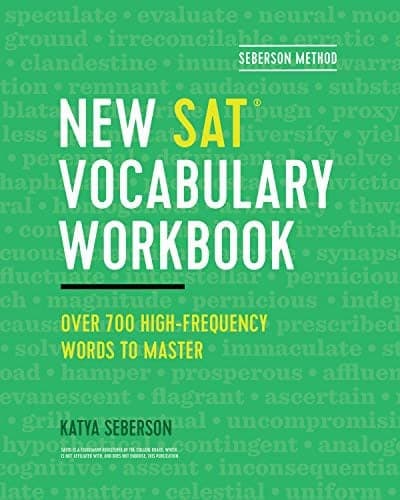
SAT Vocabulary Workbook
The closest companion to SATVocab for students who want guided lessons and written practice.
Check the workbook
A belief or opinion that goes against the orthodox or established doctrine, especially in religion.
nounPick the meaning. Keys A–D work too.
Your choice schedules the next review.
Everyone has a different opinion on chocolate, but in general everyone accepts Hershey bars are delicious.
HER-uh-see
Hershey (chocolate bar)
Heresy traditionally refers to beliefs that challenge established religious dogma; the term has historical weight and is often used in debates about faith and orthodoxy.
dissent, orthodoxy, dogma, heterodoxy, apostasy
Heresy is a strong, sometimes controversial term. Use it carefully and primarily in historical or religious contexts; in secular contexts, favor words like dissent or nonconformity when appropriate.
From Latin haeresis, via Greek hairein meaning 'to choose' or 'to take a different path'; originally referred to choosing a different doctrine or sect from the accepted one.
Mnemonic: He Rejects Established Sacred Yokes. The initial letters H-E-R-E-S-Y recall the word and remind you that a heresy is a belief that rejects established sacred dogma.
Continue in alphabetical order.
Pick any word below to jump in.
To explain or describe something in greater detail; to add more information. As an adjective, describing something that is highly detailed or ornate.
Hostility or enmity; a strong feeling of dislike that leads to active opposition.
The process of conducting tests and trials to discover or verify something; the systematic testing of hypotheses or ideas.
Related words and words with the same part of speech.
A public or formal expression of disagreement with a policy, decision, or widely held view.
The act or instance of humiliating or degrading someone; the state of being lowered in dignity or status.
The quality or state of being wildly unreasonable, illogical, or ridiculous; something that is completely contrary to reason or common sense.
A distinctive way of pronouncing words; the act of emphasizing a syllable or word (as a verb, to accent means to emphasize).
An honor; a public expression of praise or an award.
Bitterness of speech or manner; ill feeling
Study beyond this word
Add a workbook for repetition or the official guide for full-test context.
Vocabulary in context
The closest companion to SATVocab for students who want guided lessons and written practice.
Check the workbook
First-time test takers
Official question styles, test structure, and print practice from the College Board.
Check the official guidePaid Amazon links. As an Amazon Associate I earn from qualifying purchases.