
Vocabulary in context
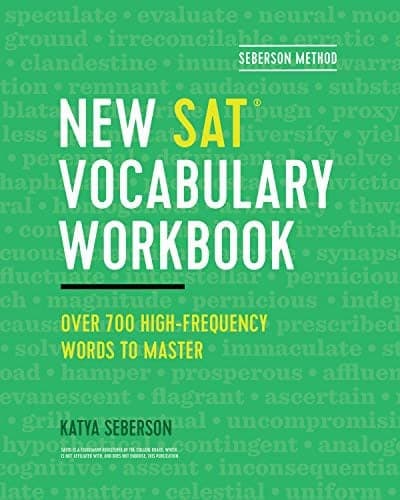
SAT Vocabulary Workbook
The closest companion to SATVocab for students who want guided lessons and written practice.
Check the workbook
The act of submitting to the opinions or wishes of another; respectful yielding.
nounPick the meaning. Keys A–D work too.
Your choice schedules the next review.
You may have a different opinion than your boss, but at the end you follow his suggestions; you must submit out of respect for him.
difference
defer ence; resembles the verb 'defer' (to yield) + the noun-forming suffix '-ence'
Remember that 'defer' means to yield or submit; '-ence' turns a verb into a noun describing a state or quality. Deference is a formal, respectful yielding to someone else's judgment.
respect, reverence, obedience, submission, compliance
Do not confuse with deferral (postponement). Deference refers to respect and yielding in opinion or judgment, whereas deferral means delaying something. Deference is often used in formal or social contexts to describe respectful submission.
From Middle English deference, Old French deference, and Latin defferre/ dēferre meaning to carry down or to yield; the suffix '-ence' forms a noun indicating a state or quality.
DEFER + ENCE: remember that to defer is to yield, and adding the noun-ending '-ence' gives the state of yielding—deference. Imagine handing your own opinion over to someone you respect.
Continue in alphabetical order.
Pick any word below to jump in.
A person who judges the merits and faults of something, such as a work of art, performance, or writing; someone who habitually expresses critical opinions about others' work.
To postpone or delay something; or to yield to someone else's judgment or authority.
Very complicated or detailed; having many interrelated parts.
Related words and words with the same part of speech.
The act or instance of humiliating or degrading someone; the state of being lowered in dignity or status.
The quality or state of being wildly unreasonable, illogical, or ridiculous; something that is completely contrary to reason or common sense.
A distinctive way of pronouncing words; the act of emphasizing a syllable or word (as a verb, to accent means to emphasize).
An honor; a public expression of praise or an award.
Bitterness of speech or manner; ill feeling
A word formed from the initial letters of a phrase, pronounced as a single word and used as a shorthand for the full name (for example, NASA or radar).
Study beyond this word
Add a workbook for repetition or the official guide for full-test context.
Vocabulary in context
The closest companion to SATVocab for students who want guided lessons and written practice.
Check the workbook
First-time test takers
Official question styles, test structure, and print practice from the College Board.
Check the official guidePaid Amazon links. As an Amazon Associate I earn from qualifying purchases.