
Vocabulary in context
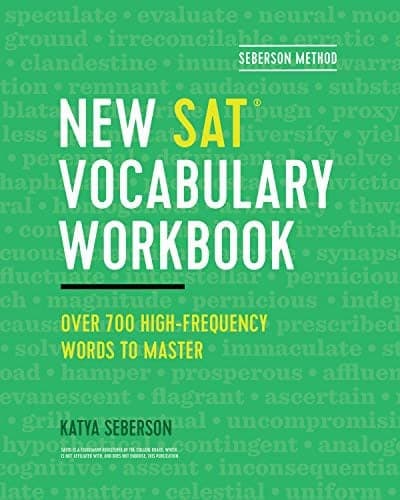
SAT Vocabulary Workbook
The closest companion to SATVocab for students who want guided lessons and written practice.
Check the workbook
A person, thing, or event placed in the wrong time in a story, artwork, or description; a chronological error or element that seems out of place in history.
nounPick the meaning. Keys A–D work too.
Your choice schedules the next review.
Picture a medieval knight in armor glancing at a bright, glowing smartphone in a bustling market—another shopper checks a wristwatch with LEDs, while a horse-drawn cart rolls by. All of these elements clash with the scene’s era, creating a clear anachronism.
uh-NACK-ruhn-iz-uhm
Looks like the noun form of 'anachronistic'; visually resembles other -ism words and the root 'chron' (time).
Etymology: from Greek ana- 'not' or 'up/again' + chronos 'time' + -ism; entered English in the 16th–17th century. In literature and film, anachronisms are often used intentionally for effect or humor but can undermine realism if unintentional.
historical inaccuracy, temporal discrepancy, chronological error, misplacement, incongruity
Note that anachronism is the noun form; the adjective is 'anachronistic' and the adverb is 'anachronistically'. Distinguish it from simply being old-fashioned or outdated (which might be described as 'antiquated' or 'obsolete' rather than anachronistic).
From Greek ana- 'not' + chronos 'time' + -ism; entered English in the 16th–17th century.
Think: AN A CHRONO MISMATCH. An item from a different time period mismatches the era, which is the core idea of an anachronism.
Continue in alphabetical order.
Pick any word below to jump in.
Produced by a sudden inner impulse or without premeditation; happening naturally and unplanned; arising from within rather than being forced from without.
Bad reputation; notoriety for negative deeds.
An excessive desire to accumulate wealth or possessions; greed.
Related words and words with the same part of speech.
The act or instance of humiliating or degrading someone; the state of being lowered in dignity or status.
The quality or state of being wildly unreasonable, illogical, or ridiculous; something that is completely contrary to reason or common sense.
A distinctive way of pronouncing words; the act of emphasizing a syllable or word (as a verb, to accent means to emphasize).
An honor; a public expression of praise or an award.
Bitterness of speech or manner; ill feeling
A word formed from the initial letters of a phrase, pronounced as a single word and used as a shorthand for the full name (for example, NASA or radar).
Study beyond this word
Add a workbook for repetition or the official guide for full-test context.
Vocabulary in context
The closest companion to SATVocab for students who want guided lessons and written practice.
Check the workbook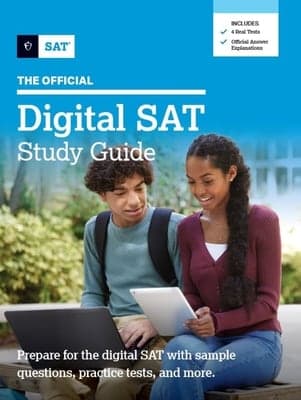
First-time test takers
Official question styles, test structure, and print practice from the College Board.
Check the official guidePaid Amazon links. As an Amazon Associate I earn from qualifying purchases.