
Vocabulary in context
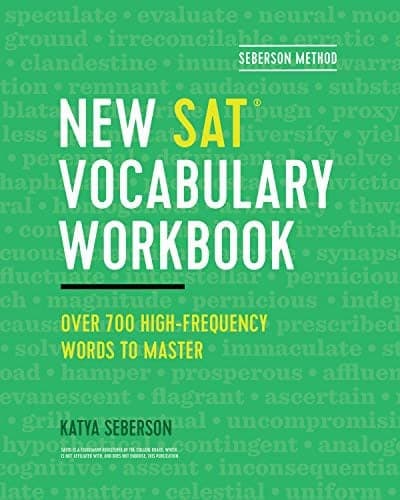
SAT Vocabulary Workbook
The closest companion to SATVocab for students who want guided lessons and written practice.
Check the workbook
Not related to or important for the matter at hand; not on-topic.
adjectivePick the meaning. Keys A–D work too.
Your choice schedules the next review.
Imagine you're in a meeting about a budget plan and someone starts talking about their weekend trip. The weekend story has nothing to do with the budget, so it's irrelevant to the discussion.
ih-REL-uh-vuhnt
Looks like relevant with the negating prefix ir- (not).
Irrelevant is the opposite of relevant. The prefix ir- is a negation that attaches to a word starting with r, turning on-topic information into not-on-topic information.
relevant, pertinent, applicability, extraneous, unrelated
In formal writing, cite only information that is relevant to the argument. Avoid labeling ideas as irrelevant unless you can clearly justify why they do not pertain to the topic.
From Latin relevans 'bearing on, relating to' with the prefix in- (variant ir-) indicating negation; thus 'irrelevant' = not bearing on the matter.
IR Ignore Relevance — if a detail would not help establish the point, treat it as IRRELEVANT.
Continue in alphabetical order.
Pick any word below to jump in.
Deceptive; based on or characterized by a fallacy; likely to mislead.
Willing to consider or receive new ideas, signals, or feedback; open to information and influence.
Produced by a sudden inner impulse or without premeditation; happening naturally and unplanned; arising from within rather than being forced from without.
Related words and words with the same part of speech.
Relevant or applicable to a particular matter; having to do with the topic at hand.
Not related to the matter at hand; not essential; irrelevant or unnecessary.
Difficult to understand; obscure or highly complex.
Happening by chance or without deliberate planning; not intended. In music, it is also a noun for a symbol that temporarily alters a pitch.
Sharp or biting in tone or taste; caustic or mordant in manner.
Ready to agree or approve without protest; compliant.
Study beyond this word
Add a workbook for repetition or the official guide for full-test context.
Vocabulary in context
The closest companion to SATVocab for students who want guided lessons and written practice.
Check the workbook
First-time test takers
Official question styles, test structure, and print practice from the College Board.
Check the official guidePaid Amazon links. As an Amazon Associate I earn from qualifying purchases.